Shop All Rings
 Eternity Rings
 Side Stone Rings
 Adjustable Rings
 Anniversary Rings
 Best-Selling Rings
 925 Silver
 14K Yellow Gold
 14K White Gold
 14K Rose Gold
 18K Yellow Gold
 18K White Gold
 18K Rose Gold
 Platinum
 Oval
Oval
 Round
Round
 Emerald
 Cushion
 Pear
Pear
 Ready to Ship
 New Arrivals
 Ring Size Guide
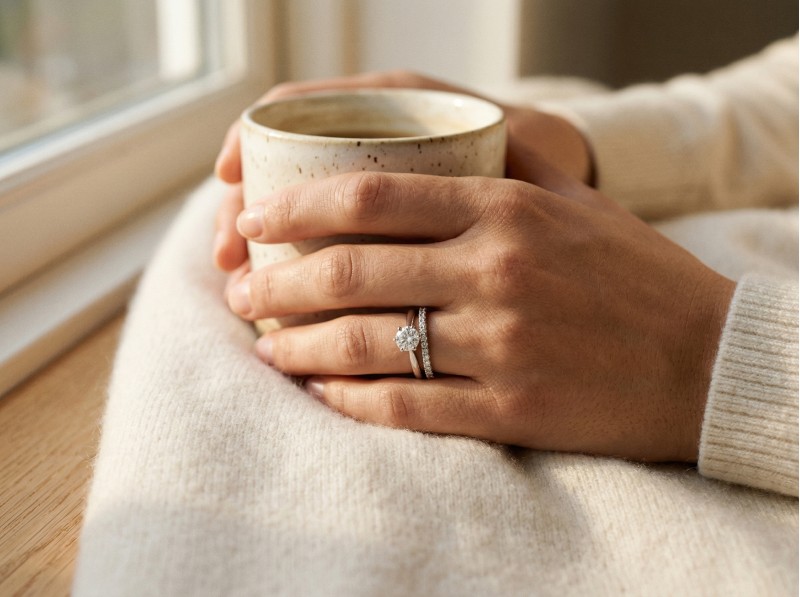
 Solitaire
 Hidden Halo
 Side Stone
 Halo
Halo
 Three-Stone
 Wedding Band Sets
 Eternity
 Classic
 Bridal Sets
 Stud Earrings
 Huggie Earrings
 Drop Earrings
 Pendants
 Tennis Necklaces
 Tennis Bracelets
 Men's Rings
 Cufflinks



If you are comparing moissanite and diamond, you are not alone. It is one of the most common questions people have when shopping for an engagement ring, a gift, or a meaningful piece of jewelry. The two stones look remarkably similar, but they differ in ways that matter when you are making a decision.
This guide walks you through the key differences: brilliance, hardness, color, clarity, and price. No hype, no pressure. Just the facts you need to choose with confidence.
What is moissanite?
Moissanite is a gemstone made of silicon carbide. It was first discovered in 1893 by Nobel Prize-winning chemist Henri Moissan, who found tiny crystals of it inside a meteorite crater in Arizona. Natural moissanite is incredibly rare, so all moissanite used in jewelry today is lab-created under controlled conditions. If you want to go deeper into the stone itself, our guide on what moissanite is covers the full story.
This is actually one of its strengths. Because moissanite is grown in a lab, every stone can be produced to a consistently high standard: D colorless, VVS1 clarity, and an excellent cut. That consistency is built into the process.
Moissanite vs. diamond: the key differences
Brilliance and fire
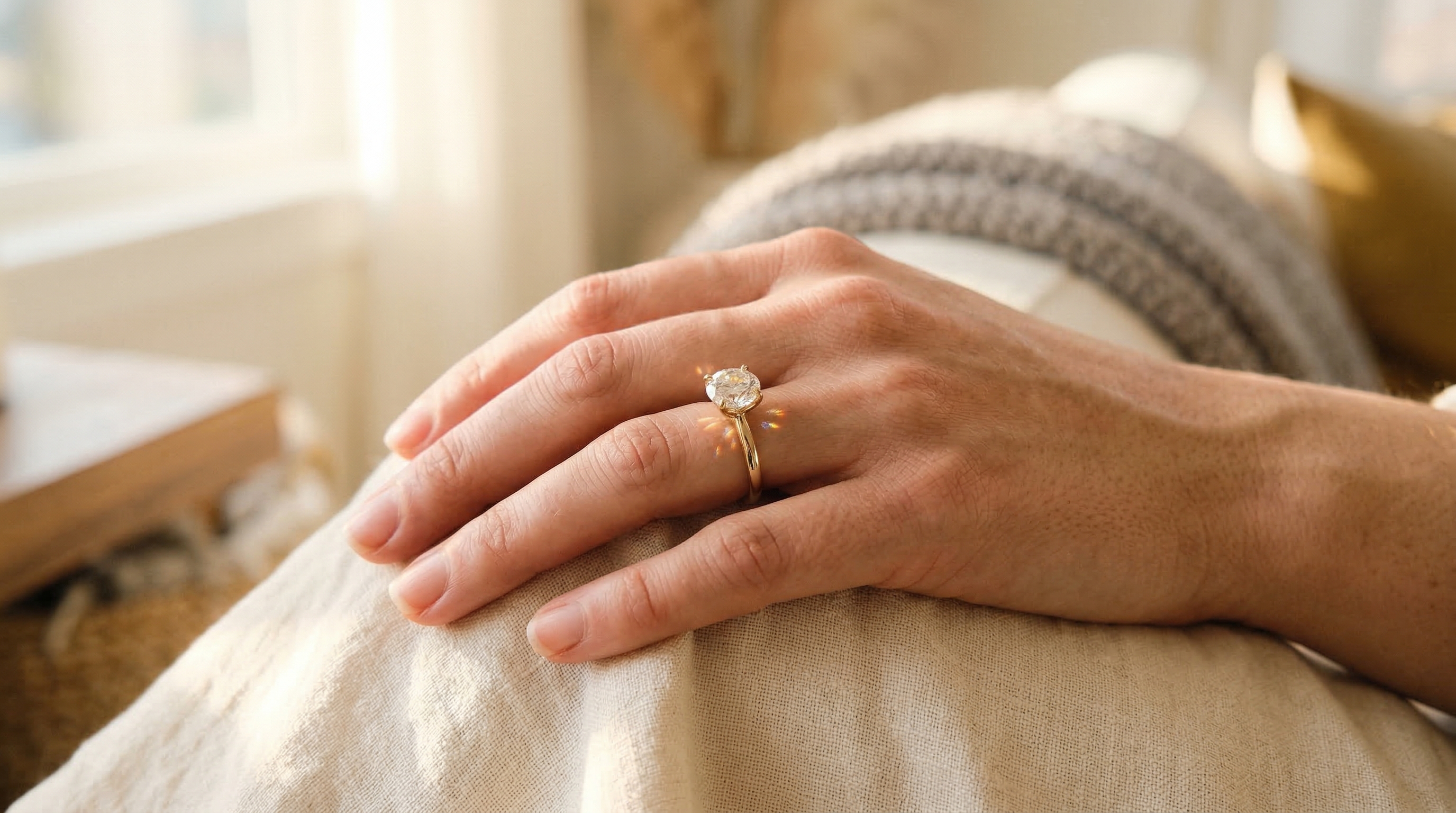
Both moissanite and diamond are known for their sparkle, but they achieve it differently. Brilliance is measured by the refractive index: diamond scores 2.42, while moissanite scores 2.65. In practice, this means moissanite disperses slightly more light, producing more fire and rainbow flashes, especially in direct sunlight.
The difference is subtle. Side by side, most people cannot tell which is which without specialized equipment.
Hardness and durability
Diamond is the hardest known mineral, scoring a perfect 10 on the Mohs hardness scale. Moissanite is right behind it at 9.25 to 9.5, making it the second-hardest gemstone in the world.
What does this mean in daily life? Both stones are extremely resistant to scratching and chipping. Moissanite will not cloud, dull, or lose its brilliance over time. It is a stone you can wear every day for decades without worrying about damage.
Color and clarity
The moissanite used in quality jewelry today is D colorless with VVS1 clarity, meaning it has no visible color tint and virtually no inclusions. This is the highest grade available, and with moissanite, it is the standard grade. Every stone meets the same high benchmark, regardless of size or budget.
Price
This is where the two stones diverge most. A moissanite of comparable size and visual quality costs significantly less than a diamond. The savings are meaningful enough that many buyers choose to invest the difference in a higher-quality metal setting, a more elaborate design, or simply keep the extra budget for other priorities.
Lab-created moissanite is produced under controlled conditions without the mining, distribution, and certification costs that drive diamond pricing. The result is a gemstone with comparable brilliance and hardness at a much more accessible price point.
If the value proposition resonates with you and you are considering an engagement ring, the moissanite engagement ring collection is available in all eight metals, from 925 silver to 950 platinum.
Side-by-side comparison
| Property | Moissanite | Diamond |
|---|---|---|
| Refractive index | 2.65 | 2.42 |
| Mohs hardness | 9.25 – 9.5 | 10 |
| Color (standard grade) | D colorless | Varies by budget |
| Clarity (standard grade) | VVS1 | Varies by budget |
| Origin | Lab-created | Mined or lab-grown |
| Clouds or dulls over time | No | No |
| Price for comparable appearance | Significantly lower | Significantly higher |
If you are also weighing moissanite against lab-grown diamonds specifically, our moissanite vs. lab diamond comparison breaks down that decision in detail.
Frequently asked questions
Can you tell the difference between moissanite and diamond?
With the naked eye, it is very difficult. Both stones are colorless, brilliant, and extremely hard. Moissanite has a slightly higher refractive index, which gives it a touch more sparkle, but only a trained eye will notice the difference.
Is moissanite a good choice for an engagement ring?
Yes. Moissanite scores 9.25 to 9.5 on the Mohs hardness scale, making it the second-hardest gemstone and highly suitable for everyday wear. It will not cloud, dull, or lose its brilliance over time. Many couples choose moissanite engagement rings because they get the visual impact they want in real precious metals at a more accessible price.
Does moissanite last as long as diamond?
For all practical purposes, yes. Moissanite is extremely resistant to scratching, chipping, and heat. It does not become cloudy or lose its fire over time. A moissanite ring will look the same decades from now as it does on the day you receive it.
Where can I buy moissanite jewelry in Europe?
My Moissanite is a European specialist in moissanite jewelry. Every piece is made in real precious metals, ships free worldwide via DHL Express, and comes with a 90-day free exchange policy. Browse the full collection to find the right piece.
Your next step
If you already know which shape and metal you prefer, browse the engagement ring collection to see what is available. Looking for earrings, necklaces, or bracelets instead? The full collection covers every category and price point.
If you are still deciding or have questions about sizing, stone size, or which metal to choose, our team responds within 1-2 hours during European business hours through the chat on every page.